

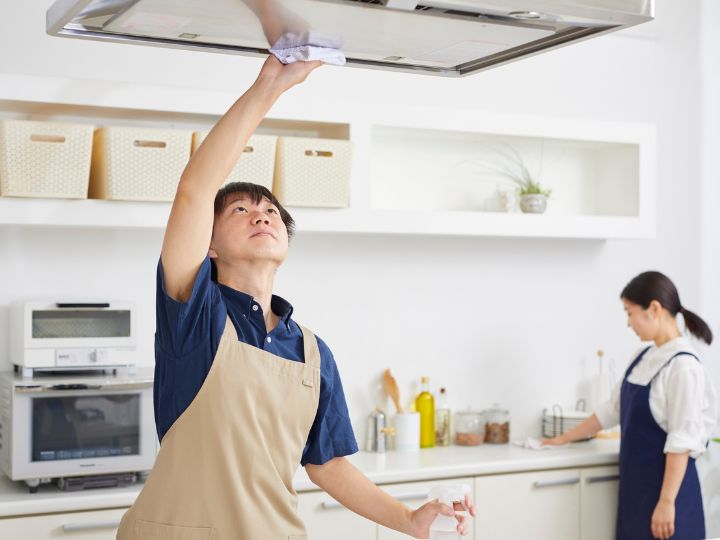
It's one of those questions that sounds simple until you actually try to answer it. How often should you deep clean your home? Every month? Every season? When company's coming and you suddenly notice the top of the refrigerator?
If you've been winging it — cleaning when it feels necessary rather than on any kind of intentional schedule — you're in good company. Most Hancock County homeowners are in the same boat. Life is busy, the list is long, and deep cleaning tends to get pushed until it can't be pushed anymore.
But here's what most people don't realize: cleaning reactively is almost always more work than cleaning on a rhythm. When things are maintained consistently, the deep cleans are shorter, easier, and less overwhelming. When they're not, you're looking at a full-day project every time you finally get around to it.
This guide breaks down what a realistic cleaning schedule actually looks like — what needs attention daily, weekly, monthly, and seasonally — so you can stop guessing and start feeling more in control of your home.
It's worth drawing a clear line here because the two serve different purposes.
Regular cleaning is maintenance. It's the stuff you do to keep your home from falling behind — wiping counters, doing dishes, vacuuming the main areas, cleaning the toilets. It takes 30 to 60 minutes a few times a week and keeps things presentable. Most households have some version of this routine, even if it's informal.
Deep cleaning goes further. It's the behind-the-furniture vacuuming, the scrubbing of grout lines, the cleaning of baseboards, the wiping down of cabinet fronts, the descaling of faucets, the washing of window sills. It addresses the buildup that regular cleaning misses — the stuff that accumulates slowly enough that you stop noticing it until it's become a real problem.
Both matter. Neither replaces the other. The question of how often you need each one depends on your household, your lifestyle, and a few factors specific to your home.
Not every Hancock County home has the same cleaning needs. Here are the factors that should inform your schedule:
Household size. More people means more traffic, more mess, and faster buildup. A couple without kids can get away with less frequent deep cleaning than a family of five. It's not complicated math, but it's worth acknowledging rather than applying a one-size-fits-all answer.
Pets. If you have dogs or cats — especially ones that spend time both indoors and outdoors — you're dealing with more hair, more dander, more tracked-in dirt, and more odor than a pet-free household. Pet owners generally need to deep clean more frequently, and certain areas like upholstery, rugs, and vents need attention more often than the standard advice suggests.
Allergies or respiratory sensitivities. If anyone in your home deals with allergies, asthma, or other respiratory issues, the standard deep cleaning frequency isn't going to cut it. Dust, dander, mold spores, and other airborne irritants accumulate faster than most people realize, and they have real health consequences for sensitive individuals. More frequent deep cleaning — along with regular filter changes and air quality attention — makes a meaningful difference.
The age of your home. Older homes in Hancock County, particularly those with older HVAC systems, can accumulate dust and particulate matter faster. They may also have more surface area that traps debris — original woodwork, older tile grout, textured walls — that requires more thorough attention to clean properly.
How much time you spend at home. Remote workers and families who are home most of the day generate more wear and traffic than households that are mostly out from morning to evening. More time at home generally means a faster accumulation of the things that need deep cleaning attention.
Here's a practical framework broken down by frequency. Think of this less as a rigid checklist and more as a starting point you can adjust based on your household.
This isn't deep cleaning, but it's the foundation that makes deep cleaning less brutal when you get to it. Wipe down kitchen counters and the stovetop after cooking. Do the dishes or run the dishwasher. Do a quick sweep or Swiffer pass through high-traffic areas. Hang up clothes rather than letting them pile. Wipe down the bathroom sink and counter.
None of this is glamorous, but households that do the daily basics consistently spend a fraction of the time on deep cleaning compared to those that don't.
This is your standard cleaning rhythm. Vacuum all floors including under furniture edges. Mop hard floors. Scrub toilets, sinks, and tubs. Clean mirrors and glass surfaces. Wipe down appliance exteriors. Change bed linens. Take out trash from all rooms, not just the kitchen.
For most Hancock County households, a solid weekly clean keeps the home feeling maintained and prevents the kind of buildup that turns into a project.
This is where you start getting into actual deep cleaning territory. Once a month, work through the areas that weekly cleaning misses:
Clean inside the microwave thoroughly. Wipe down cabinet fronts in the kitchen and bathrooms. Dust ceiling fans, light fixtures, and the tops of door frames. Scrub bathroom tile and grout. Clean window sills and tracks. Wipe down baseboards throughout the home. Vacuum upholstered furniture. Clean the inside of the refrigerator. Run a cleaning cycle on the washing machine and dishwasher.
If you have pets, add vacuuming vents and washing pet bedding to the monthly list.
Every three months or so, your home needs a more thorough reset. This is the full deep clean — the one that covers the things monthly cleaning doesn't get to:
Clean behind and underneath large appliances. Wash windows inside and out. Deep clean the oven. Shampoo or steam clean carpets and rugs. Clean interior windows and sliding door tracks. Descale faucets and showerheads. Wash curtains or wipe down blinds. Clean light switch covers and outlet plates. Organize and wipe out pantry shelves, linen closets, and bathroom cabinets. Check for mold or mildew in bathrooms and laundry areas.
This is also the level of cleaning that many Hancock County homeowners find most practical to bring in professional help for — not because they can't do it, but because doing it thoroughly at this scale takes most of a day and real attention to detail.
Some things only need attention once or twice a year but are easy to forget entirely:
Wash or dry-clean heavy curtains and drapes. Clean and inspect the dryer vent — this is a fire safety issue, not just a cleaning one. Flip or rotate mattresses. Clean the inside of the dishwasher thoroughly, including the filter. Wash exterior-facing windows. Have carpets professionally cleaned if you have heavy traffic or pets. Clean the garage. Deep clean the basement or crawlspace storage areas.
Sometimes the schedule slips, and that's fine. Here are the signs that tell you it's time to prioritize a deep clean regardless of where you are in the calendar:
You notice a stale or musty odor that doesn't go away after regular cleaning. Allergy symptoms in your household have gotten worse. Surfaces feel grimy or sticky even after wiping them down. Dust is visibly accumulating on surfaces quickly after you clean them. You're embarrassed to have people over unexpectedly. You can't remember the last time you cleaned behind the refrigerator, under the couch, or inside the oven.
Any of these is a signal. None of them mean you've failed at maintaining your home — they just mean it's time for a reset.
The best cleaning schedule is the one you can realistically follow, not the ideal one that sounds good in a blog post and gets abandoned by February.
Start by being honest about your household. How many people? Pets? Allergies? How much time do you genuinely have in a week? Build your rhythm around what's actually sustainable rather than what feels impressive to write down.
A few things that help: tie cleaning tasks to existing routines rather than treating them as separate events. Wipe the stovetop while you're still in the kitchen after dinner. Do a bathroom wipe-down while you're waiting for the shower to warm up. Vacuum on the same day every week so it becomes automatic rather than a decision.
And for the deeper, more time-intensive work — the quarterly resets, the seasonal deep cleans — consider whether your time and energy are better spent doing it yourself or bringing in a team that can do it thoroughly and efficiently in a fraction of the time.
At ProClean New Pal, we work with Hancock County families who have every intention of keeping up with their homes — and who sometimes need a hand getting things back under control, or keeping them there.
Whether you need a one-time deep clean to reset your space or a recurring cleaning plan that takes the weekly maintenance off your plate entirely, we'll build something that works for your home and your schedule. We show up on time, we clean thoroughly, and we make sure your home feels the way a home should feel — without you spending your weekend making it happen.
If your Hancock County home is due for a real deep clean, we'd love to help. Just reach out and tell us what you're working with. We'll take it from there.